
Invoice Finance vs Invoice Factoring: Which Is Right for Your Business?
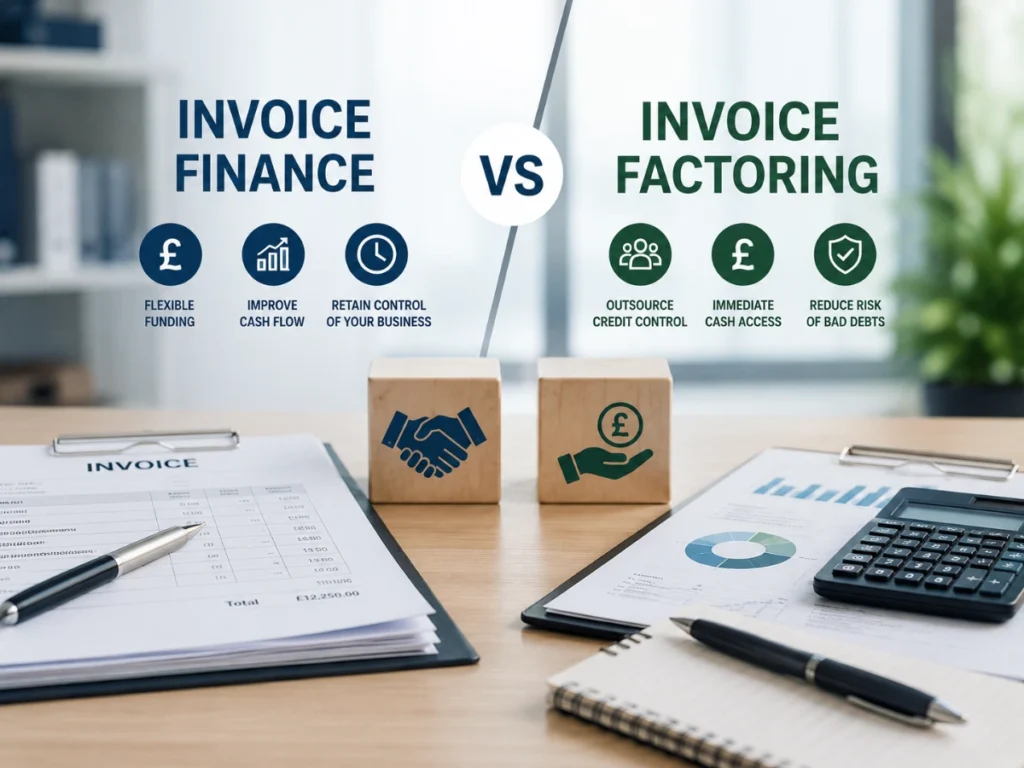
Invoice finance is a broad term for borrowing against unpaid invoices, and it splits into two main types: invoice discounting, where you keep control of collecting payment, and invoice factoring, where the finance provider collects payment from your customers on your behalf. If you want to keep your credit control in-house and your customers unaware a third party is involved, invoice discounting is usually the better fit. If you’d rather hand over collections and don’t have the time or team to chase payments, invoice factoring makes more sense. Choosing between them depends on your business size, customer relationships, and how hands-on you want to be with your sales ledger.
Let’s look at how each option actually works, what they cost, and how to decide which one suits your business.
What Is Invoice Finance?
Invoice finance lets a business release cash tied up in unpaid invoices instead of waiting 30, 60, or even 90 days for customers to pay. Rather than sitting on outstanding receivables, a finance provider advances a percentage of the invoice value often up to 90% almost immediately, with the remainder paid once the customer settles, minus fees.
It’s a useful option for businesses that are profitable on paper but short on cash simply because payment terms are long. Two main structures sit under the invoice finance umbrella: invoice discounting and invoice factoring. Selective invoice finance, sometimes called spot factoring, is a third option that lets you fund individual invoices rather than your entire sales ledger.
What Is Invoice Factoring?
What is invoice factoring, exactly? It’s a type of invoice finance where the provider doesn’t just lend against your invoices, they take over collecting payment from your customers directly. Once you’ve issued an invoice, the factor advances most of its value upfront, then contacts your customer for payment when it’s due.
Because the provider is managing collections, your customers will usually know a third party is involved this is often called a “disclosed” facility. For businesses without an in-house credit control team, this can be a genuine relief, since it removes the time spent chasing late payers.
Invoice Discounting vs Factoring: The Core Difference
The invoice discounting vs factoring decision really comes down to one question: who’s collecting the money?
- Invoice discounting: Your business stays in charge of collections. Customers usually aren’t aware a finance provider is involved, so your relationships and reputation stay exactly as they are.
- Invoice factoring: The finance provider manages collections and contacts your customers directly. This frees up your time but means your customers know a third party is involved.
Discounting tends to suit businesses with an established credit control process and confidence in their own collections. Factoring suits businesses that want that burden lifted, or that don’t have the resources to chase invoices consistently.
How Much Does Each Option Cost?
Pricing for both invoice finance and invoice factoring in the UK typically has two parts: a service fee and a discount fee (similar to interest, charged on funds drawn down). As a general guide:
- Invoice discounting tends to be slightly cheaper, since you’re handling collections yourself and saving the provider that overhead.
- Invoice factoring costs a bit more, reflecting the extra work of managing your sales ledger and chasing payment.
Invoice factoring rates in the UK vary depending on your turnover, sector, and the reliability of your customers, so it’s worth comparing more than one provider rather than accepting the first quote. Businesses with high-value, low-volume invoices may also find selective invoice finance cheaper overall, since there’s no commitment to fund the whole ledger.
Which Is Better for a Small Business?
There’s no universal answer here, it depends on how your business is set up.
Invoice financing for small businesses that have a small team, limited admin capacity, or inconsistent cash flow often works better with factoring, since the provider takes on the chasing.
Invoice factoring for small businesses in sectors like recruitment, haulage, or wholesale where invoices are frequent and customers can be slow to pay is a common fit, because outsourced collections match how these industries already operate.
On the other hand, businesses with strong, reliable customer relationships and their own credit control process often prefer discounting, since it keeps everything in-house and avoids customers learning that invoices are being financed.
What to Check Before You Choose a Provider
Before signing with any invoice finance or factoring provider, it’s worth checking:
- Minimum turnover requirements: Many providers expect a minimum monthly turnover, commonly £20,000 or more.
- Contract length and exit terms: Some facilities lock you in with minimum-volume clauses or long notice periods.
- Recourse vs non-recourse: Recourse factoring means you’re liable if a customer doesn’t pay; non-recourse shifts that risk to the provider, usually at a higher cost.
- Whole-ledger vs selective facilities: Whole-ledger financing usually gets better rates, while selective invoice finance offers more flexibility with a higher per-invoice cost.
At FairBridge Finance, we help UK businesses work through exactly these details comparing invoice finance and invoice factoring options side by side, so you’re not left guessing which structure actually fits your cash flow and customer base.
Making the Right Call for Your Business
If you’re still unsure, a simple way to decide is to ask two questions: do you want to keep managing collections yourself, and can your business handle the admin of chasing late payers consistently? If the answer to both is yes, invoice discounting is likely the better route. If not, invoice factoring takes that responsibility off your plate.
Either way, both fall under the same invoice finance UK market, and the “right” choice usually comes down to your team’s capacity and how you want customers to experience your billing process not one option being universally better than the other.
Working with a broker like FairBridge Finance means you get a clear comparison of both structures against your actual numbers, rather than committing to a facility based on a single provider’s pitch.
Frequently Asked Questions
What is the difference between invoice finance and invoice factoring?
Invoice finance is a funding solution that lets businesses borrow against unpaid invoices. Invoice factoring is a type of invoice finance where the finance provider manages customer payment collections on your behalf, instead of you handling them yourself.
Is invoice discounting cheaper than invoice factoring?
Yes. Invoice discounting is generally cheaper than invoice factoring because you continue managing customer collections. As a result, fees are typically around 0.5%–1.5% lower per month than factoring.
Do customers know if a business is using invoice factoring?
Usually, yes. Invoice factoring is typically a disclosed facility, meaning customers know a finance provider is collecting payments because invoices and payment requests are issued by the factor.
Is invoice factoring suitable for small businesses?
Yes. Invoice factoring is well suited to small businesses, especially those without a dedicated credit control team. It improves cash flow while outsourcing invoice collection and reducing administrative workload.
What is selective invoice finance?
Selective invoice finance, also known as spot factoring, allows businesses to fund individual invoices instead of their entire sales ledger. It’s ideal for businesses with occasional high-value invoices or a smaller number of customers.
How do I choose between invoice discounting and factoring?
Choose invoice discounting if you want to manage customer collections yourself and keep the funding arrangement confidential. Choose invoice factoring if you’d prefer the finance provider to handle collections and credit control on your behalf.
FairBridge Finance is an FCA-authorised business funding broker helping UK businesses compare invoice finance and invoice factoring options to find the right fit for their cash flow.
On this page
Related Topics
Case Studies
Read our latest articles covering commercial finance solutions, business loans, property funding, and lending insights across the UK.

Franchise Finance UK: How to Fund a New Franchise
Franchise finance UK is a category of business funding designed specifically to…


Development Exit Finance: How to Avoid a Distressed Sale
Development exit finance is a short-term loan used to repay an existing…

Limited Company Buy-to-Let: Do You Need an SPV?
Limited company buy-to-let means purchasing rental property through a Special Purpose Vehicle…