
Bridging Finance for Auction Purchases: How to Complete in 28 Days
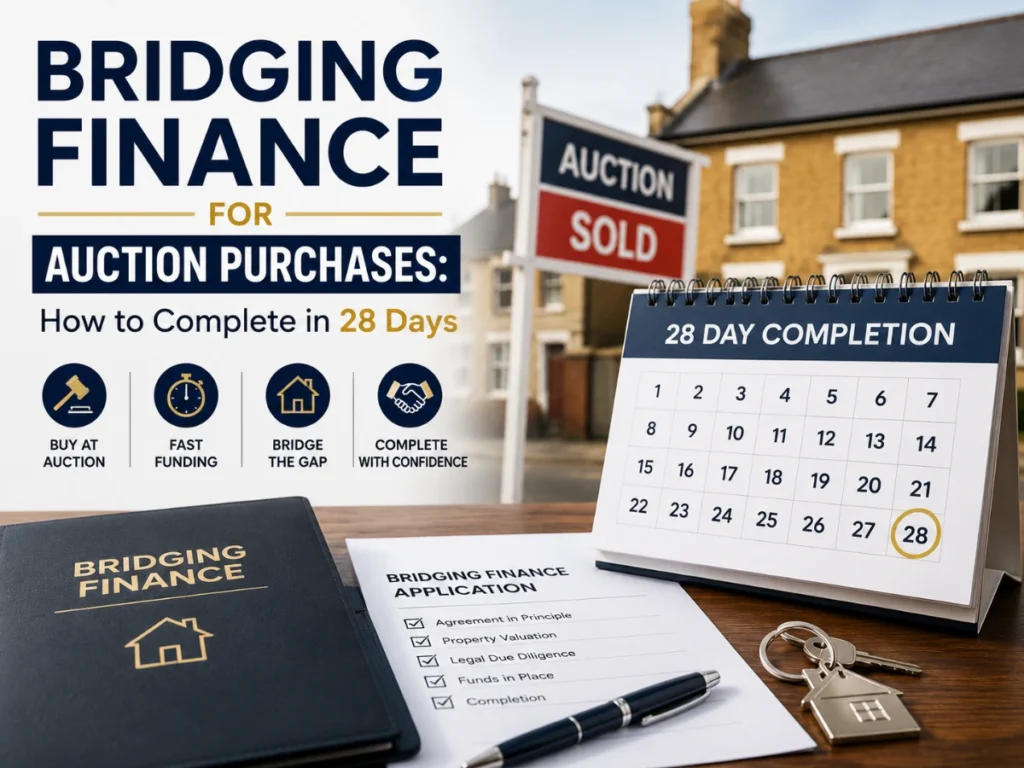
Bridging finance is the standard funding solution for auction purchases in the UK because most auction contracts require completion within 28 days, a timeline standard mortgages, which typically take 8 to 12 weeks, cannot meet. A bridging loan can be arranged in as little as 7 to 14 days, secured against the property being purchased or another asset you own, allowing you to exchange contracts with confidence and complete on time without risking your deposit. FairBridge Finance helps buyers across the UK arrange auction bridging finance quickly through a whole-of-market lending panel, so completion happens on time.
Key Takeaways
- Why bridging finance matters at auction: Auction contracts are legally binding the moment the hammer falls, and completion is almost always required within 28 days.
- Speed: Bridging loans can be arranged in 7 to 14 days, well within the auction completion window.
- Deposit risk: If you can’t complete on time, you typically lose your 10% deposit and may face further legal costs, making pre-arranged finance essential.
- Preparation is everything: The strongest applications are prepared before the auction, not after winning the bid.
- What lenders focus on: The property’s value, your exit strategy, and how quickly documentation can be provided, more than income alone.
- Unmortgageable properties: Many auction lots don’t qualify for a standard mortgage due to condition but are well suited to bridging finance.
- A broker gives you an edge: Access to a wider lending panel means a better chance of matching your specific property and timeline.
Why Auction Purchases Need a Different Kind of Finance
Buying at auction is fundamentally different from a standard property purchase. The moment the gavel comes down, you’re in a legally binding contract, deposit paid, completion date fixed, usually 28 days later. There’re no cooling-off period and no room to renegotiate the timeline if your finance falls through.
A standard mortgage application, with its valuation queues, underwriting checks, and multi-week processing times, simply isn’t built for that pace. This is precisely the gap bridging finance is designed to fill; it prioritizes speed and asset value over the lengthy affordability assessments that slow down conventional lending.
Auction volumes across the UK have been climbing, driven partly by landlords restructuring portfolios and a steady stream of estate sales and distressed assets reaching auction rooms. That means more buyers than ever are relying on bridging finance to compete effectively and complete reliably.
The 28-Day Timeline: What Actually Needs to Happen
Understanding the sequence helps explain why speed and preparation both matters so much.
Day 0 The hammer falls: You exchange contracts immediately and pay your deposit, usually 10% of the purchase price.
Days 1–5 Application and valuation: Your broker submits the case to a suitable lender, and a valuation is arranged, often using a desktop or AVM (Automated Valuation Model) where the property qualifies, which can shave days off the process.
Days 5–15 Underwriting and legal work: The lender’s solicitor and your solicitor work in parallel on searches, title checks, and loan documentation.
Days 15–25 Offer and funds released: Once underwriting is complete, funds are released to your solicitor ready for completion.
Day 28 Completion: Funds transfer, and the property is legally yours.
Every stage depends on the one before it, which is why delays early on, missing documents, an unresponsive solicitor, an incomplete application, put the entire 28-day deadline at risk.
What Happens If You Can’t Complete in Time?
This is the risk that makes pre-arranged bridging finance so important. If completion doesn’t happen by the contractual deadline, auction terms typically allow the seller to:
- Keep your deposit (usually 10% of the purchase price)
- Charge daily interest on the outstanding balance
- Resell the property and potentially pursue you for any shortfall in price
- Pursue additional legal costs
None of this is guesswork, its standard auction contract terms, which is exactly why lenders and brokers place so much emphasis on having finance lined up, or at least pre-assessed, before you bid.
How to Prepare Before You Bid
The buyers who complete smoothly are almost always the ones who prepared before winning the lot, not after.
- Get an Agreement in Principle before auction day: This confirms in advance that a lender is willing to fund a purchase up to a certain value, giving you the confidence to bid.
- Have your deposit ready and accessible: You’ll need to pay it on the day, in cash or by card, depending on the auction house.
- Read the legal pack thoroughly: This includes title documents, searches, and special conditions, issues here can affect both your bid and your lender’s valuation.
- Instruct a solicitor experienced in auction purchases in advance: Speed here directly affects whether you hit your 28-day deadline.
- Know your exit strategy before you bid: Whether it’s refinancing onto a buy-to-let mortgage, refurbishing and reselling, or another route, lenders will want this clearly evidenced, not just stated.
Why Many Auction Properties Need Bridging Finance Anyway
Auction lots are often sold precisely because they don’t fit standard lending criteria, structural issues, no kitchen or bathroom, short lease, or unusual construction. These are the kinds of properties standard mortgage lenders routinely decline.
Bridging finance takes a different view, focusing on the property’s value and your plan for it, whether that’s a light refurbishment before resale, a heavier renovation before refinancing onto a buy-to-let mortgage, or converting a commercial unit into residential use. This makes it possible to fund purchases that would otherwise be out of reach through conventional lending.
Getting the Right Support
Auction purchases move fast, and the margin for error is small. Working with a broker who understands both the auction process and the bridging finance market give you a meaningful advantage, someone who can assess a property’s suitability before you bid, line up an Agreement in Principle, and manage the lender relationship so the 28-day clock never becomes a source of stress.
FairBridge Finance works with property investors, developers, and landlords across the UK to structure auction bridging finance quickly and reliably, drawing on a whole-of-market lending panel rather than a single bank’s product range. Because auction deadlines don’t move, the team focuses on getting cases pre-assessed and properly packaged from day one, with clear documentation, a strong exit strategy, and realistic timelines, so completion happens on time and without last-minute surprises.
Frequently Asked Questions
Q: How fast can bridging finance be arranged for an auction purchase?
Bridging finance for an auction purchase can usually be arranged within 7 to 14 business days. This is typically fast enough to meet the standard 28-day auction completion deadline, provided all required documents are submitted promptly.
Q: Can I get bridging finance approved before I bid at auction?
Yes, you can get bridging finance approved before bidding at auction. An Agreement in Principle (AIP) confirms a lender’s willingness to lend up to a certain amount, helping you bid with greater confidence.
Q: What happens if my bridging loan isn’t ready by the completion date?
If your bridging loan isn’t ready by the completion date, you could lose your deposit and face additional costs. You may also incur daily interest charges and legal penalties, making early finance preparation essential.
Q: Can I get bridging finance for a property that won’t get a standard mortgage?
Yes, bridging finance is available for properties that don’t qualify for a standard mortgage. Lenders focus primarily on the property’s value and your exit strategy rather than its current condition.
Q: Do I need a large deposit for auction bridging finance?
Yes, you’ll usually need to pay a 10% auction deposit on the day of purchase. The bridging loan then covers the remaining balance needed to complete the property purchase.
Q: What’s the difference between an AVM and a full valuation for bridging finance?
An AVM is a desktop-based property valuation, while a full valuation requires an on-site inspection. AVMs are faster and can help speed up bridging finance approval when the lender and property qualify.
Related Topics
Case Studies
Read our latest articles covering commercial finance solutions, business loans, property funding, and lending insights across the UK.
Asset Finance for Manufacturing & Construction: A Practical Guide
Asset finance UK lending lets manufacturing and construction businesses spread the cost…

Invoice Finance vs Invoice Factoring: Which Is Right for Your Business?
Invoice finance is a broad term for borrowing against unpaid invoices, and…

Property Development Finance Explained: A Guide for UK Developers
Property development finance is short-term funding used to cover the cost of…