
Asset Finance for Manufacturing & Construction: A Practical Guide
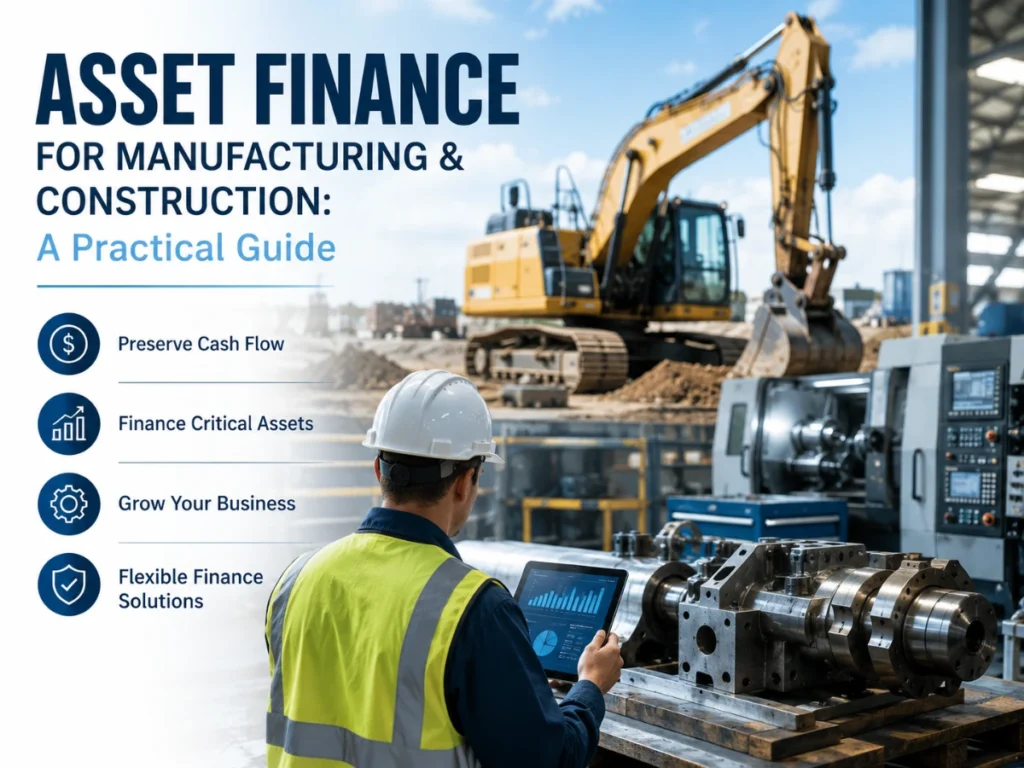
Asset finance UK lending lets manufacturing and construction businesses spread the cost of expensive equipment machinery, vehicles, plant, or tools over time instead of paying the full amount upfront. Rather than tying up cash reserves, a business makes fixed monthly payments while using the equipment straight away, with the asset itself usually securing the agreement. For manufacturers and construction firms, where machinery costs can run into hundreds of thousands of pounds, this makes asset finance one of the most practical ways to grow capacity without disrupting day-to-day cash flow.
Let’s look at how asset finance actually works, the main options available, and what lenders check before approving funding for manufacturing or construction equipment.
What Is Asset Finance?
It’s a way of acquiring business equipment from CNC machines to excavators without paying the full purchase price outright. Instead, a lender either buys the asset and leases it to you, or advances funds against it, and you repay over an agreed term.
This matters most in sectors like manufacturing and construction, where the equipment needed to operate is expensive, has a long working life, and is essential from day one. Waiting to save up cash before buying a machine often means missing contracts or falling behind competitors who financed theirs instead.
Why Manufacturing and Construction Businesses Rely on Asset Finance
Both sectors share a common problem: the tools of the trade are capital-intensive, but revenue often comes in stages project by project, or order by order. Business asset finance solves this mismatch by letting you use equipment now and pay for it as it earns money for the business.
In manufacturing, this might mean financing production line equipment, robotics, or specialist tooling. In construction, it’s more commonly diggers, cranes, scaffolding rigs, or fleet vehicles. Either way, the equipment generates income or enables contracts almost immediately, which is exactly what makes financing it rather than buying outright a sensible move for cash flow.
The Main Types of Asset Finance
There isn’t just one structure under the asset finance umbrella. The right one depends on whether you want to eventually own the equipment, how long you’ll need it, and how your business is set up.
Hire Purchase: You pay in instalments and own the asset outright once the final payment is made. This suits equipment you’ll use for years, like heavy machinery or long-life plant equipment.
Finance Lease: The lender owns the asset, and you pay to use it over a set term. This can free up capital and may suit equipment that needs regular upgrading, though you won’t own it at the end.
Operating Lease: Similar to a finance lease but usually shorter-term, often used for vehicles or equipment that’s only needed for a specific project or season.
Refinancing (Asset-Based Lending): If you already own equipment outright, asset lending against it can release working capital useful if cash is tied up in machinery you already have but need liquidity elsewhere in the business.
Asset Finance for Manufacturing: What to Consider
Manufacturing businesses typically finance production equipment, machinery, and sometimes entire production lines. Because this equipment often has a genuinely long working life sometimes 10-15 years hire purchase is a common route, since ownership at the end reflects the asset’s continued usefulness.
Machinery finance decisions in manufacturing also need to account for depreciation and technology cycles. Equipment that’s likely to be superseded quickly might suit a lease structure better than outright ownership, so it’s worth thinking about the asset’s realistic lifespan before choosing a structure.
Asset Finance for Construction: What to Consider
Construction businesses face a slightly different challenge equipment is often project-specific, and cash flow can be lumpy depending on contract stage payments. This makes flexible structures, like operating leases or shorter-term hire purchase agreements, particularly useful for vehicles, diggers, and site equipment that might only be needed for a defined project window.
For contractors bidding on multiple jobs at once, equipment finance UK providers who understand construction cash flow cycles payment delays, retention money, and seasonal demand tend to structure repayments more sensibly than generic lenders.
What Lenders Look For
Whether you’re approaching a bank or an asset finance company, the underwriting process usually looks at similar factors:
- Trading history most lenders want to see at least 12 months of trading, though newer businesses can sometimes secure funding against strong contracts or director experience.
- The asset itself its resale value, condition (new or used), and expected working life all affect how much can be borrowed and over what term.
- Cash flow and turnover lenders check whether repayments are realistically affordable against existing income, not just projected revenue.
- Deposit or initial payment some agreements require a deposit, typically 10-20%, which can reduce monthly repayments.
- Sector experience lenders are often more comfortable financing equipment in sectors they understand well, which is why construction and manufacturing are both well-served niches in the UK asset finance market.
Choosing the Right Asset Finance Company
Not every lender understands the practical realities of manufacturing or construction. Some generic finance companies apply the same criteria regardless of sector, which can mean slower decisions or terms that don’t reflect how these industries actually operate seasonal demand, contract-stage payments, or equipment that depreciates faster under heavy site use.
This is where working with a broker rather than a single lender makes a real difference. At FairBridge Finance, we work with manufacturing and construction businesses across the UK to match them with lenders who genuinely understand sector-specific cash flow patterns, rather than applying a one-size-fits-all lending model.
Getting the Structure Right from the Start
The biggest mistake businesses make with asset finance isn’t choosing the wrong lender it’s choosing the wrong structure for how the equipment will actually be used. A machine that will run for fifteen years suits hire purchase. A vehicle needed for one large contract might suit a short lease instead. Getting this right from the outset avoids either overpaying for flexibility you don’t need, or locking into ownership of equipment that’s already outdated by the time you’ve paid it off.
If you’re unsure which structure fits your next equipment purchase, FairBridge Finance can talk through the options against your specific contracts and cash flow, rather than leaving you to guess.
Frequently Asked Questions
What is asset finance and how does it work?
Asset finance is a funding solution that allows businesses to acquire equipment without paying the full cost upfront. Instead, you make fixed monthly payments over an agreed term, with the lender either leasing the asset to you or financing its purchase.
What’s the difference between hire purchase and leasing for construction equipment?
Hire purchase lets you own the equipment after completing all repayments, making it ideal for long-term assets. Leasing allows the lender to retain ownership, making it a better option for equipment needed for a shorter period or likely to be upgraded.
Can manufacturing businesses get asset finance for used machinery?
Yes. Many asset finance providers offer funding for used machinery. The amount you can borrow and the repayment term usually depend on the equipment’s age, condition, and expected remaining working life.
Do construction companies need a deposit for asset finance?
It depends on the lender and the type of asset. However, many hire purchase and leasing agreements require a 10%–20% deposit, which can help reduce monthly repayments.
Is asset finance better than a business loan for buying equipment?
For equipment purchases, asset finance is often the better option because the asset itself acts as security. This can provide more competitive rates than using an unsecured business loan to buy machinery or equipment.
How quickly can asset finance be arranged for a construction contract?
The timeline varies by lender and the complexity of the application, but many asset finance providers can approve and arrange funding within a few days when all required documentation is provided.
FairBridge Finance is an FCA-authorised business funding broker helping manufacturing and construction businesses across the UK access the right asset finance for their equipment needs.
On this page
Related Topics
Case Studies
Read our latest articles covering commercial finance solutions, business loans, property funding, and lending insights across the UK.

Franchise Finance UK: How to Fund a New Franchise
Franchise finance UK is a category of business funding designed specifically to…


Development Exit Finance: How to Avoid a Distressed Sale
Development exit finance is a short-term loan used to repay an existing…

Limited Company Buy-to-Let: Do You Need an SPV?
Limited company buy-to-let means purchasing rental property through a Special Purpose Vehicle…